Most people who have obstructive sleep apnea do not know it. They know they are tired. They know their partner has mentioned the snoring. What they usually have not been told is that the inside of their mouth has been showing signs of it for years, and that a hygienist looking carefully is often the first person in a position to notice.
Why a dental chair is a good place to notice
You see us more often than you see your physician, and we spend that time looking directly into the space the problem lives in. The airway runs behind your tongue and soft palate. When it narrows during sleep, the body responds by clenching the jaw forward to reopen it, and that response leaves marks on your teeth.
None of this makes us the people who diagnose sleep apnea. That requires a sleep study, ordered and read by a physician. But noticing is what gets someone to that study, and a great many people never get there because nobody looked.
What we actually look at
Flattened, worn edges on the back teeth, and cracks in enamel that has been under sustained force. Fillings and crowns that keep failing on one side. Gum recession in places brushing does not explain. Together these say the jaw is doing something at night that it is not doing during the day.
Then the tongue. A scalloped edge, where the sides show indentations from pressing against the teeth, suggests a tongue with nowhere comfortable to rest. We look at how far back the soft palate sits, whether the tonsils crowd the throat, and how you breathe while sitting quietly, because a habit of breathing through the mouth rather than the nose changes everything downstream.
The symptoms nobody connects to teeth
Waking with a headache at the temples. A jaw that aches or clicks in the morning and settles by lunchtime. Dry mouth on waking, which is what happens when you have spent eight hours breathing through an open mouth. Needing the bathroom repeatedly at night. Being exhausted after a full night in bed.
Any one of these has other explanations. Several of them together, in someone whose molars are visibly worn flat, is a pattern worth investigating rather than living with. It is also worth saying that plenty of people with sleep apnea are not overweight and do not snore loudly, so ruling yourself out on those grounds is a mistake.
Why it is worth chasing down
Untreated obstructive sleep apnea is associated with high blood pressure, heart disease, stroke, and poorly controlled blood sugar. Every interruption to breathing is a small stress response, and repeating that several hundred times a night has consequences that accumulate over years rather than announcing themselves.
There is also the immediate cost of the grinding itself. Enamel does not grow back, and a night of clenching applies far more force than chewing ever does. People are often surprised that the reason their crowns keep breaking has nothing to do with the dentistry and everything to do with what happens while they sleep.
What happens if we spot something
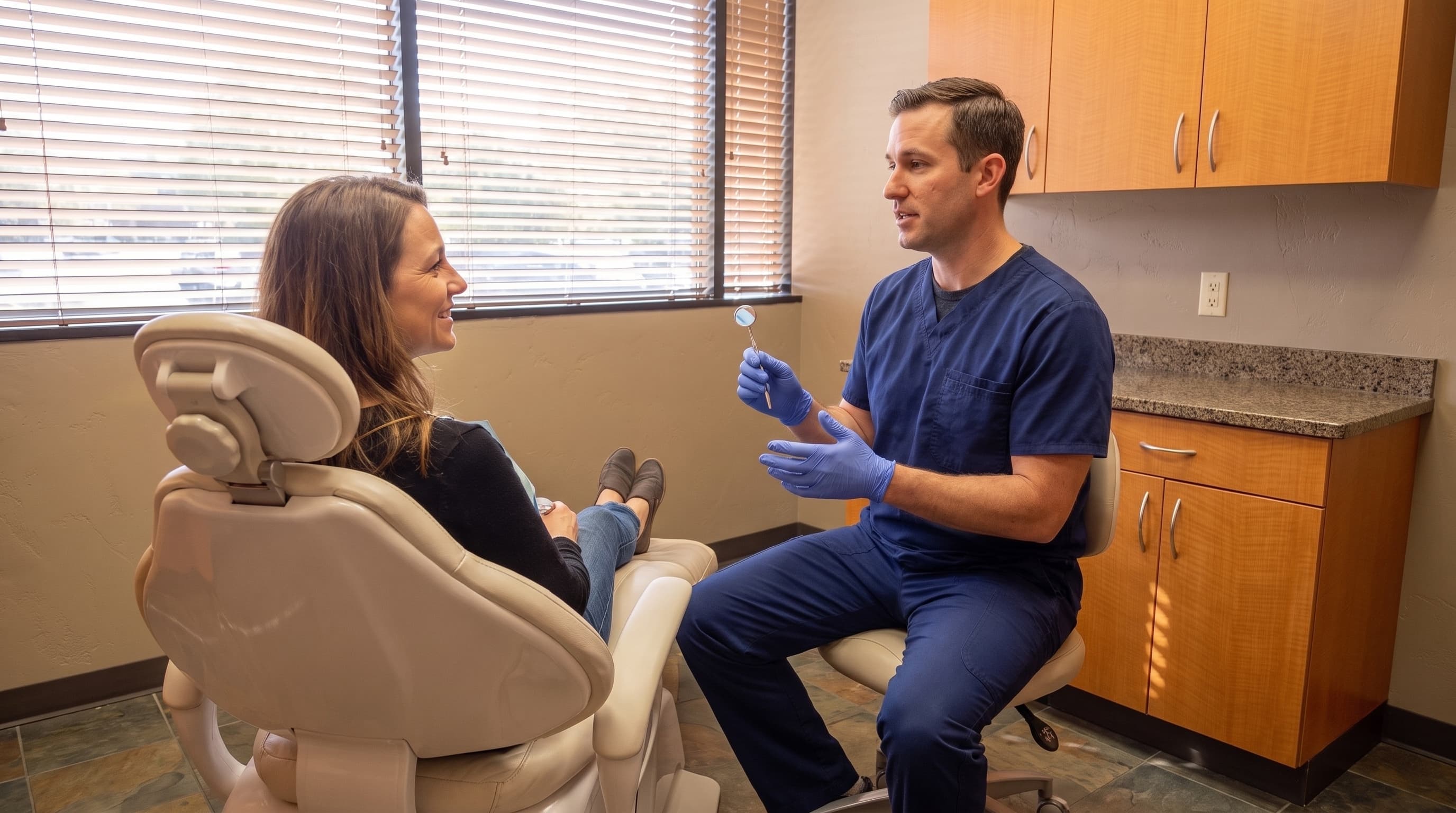
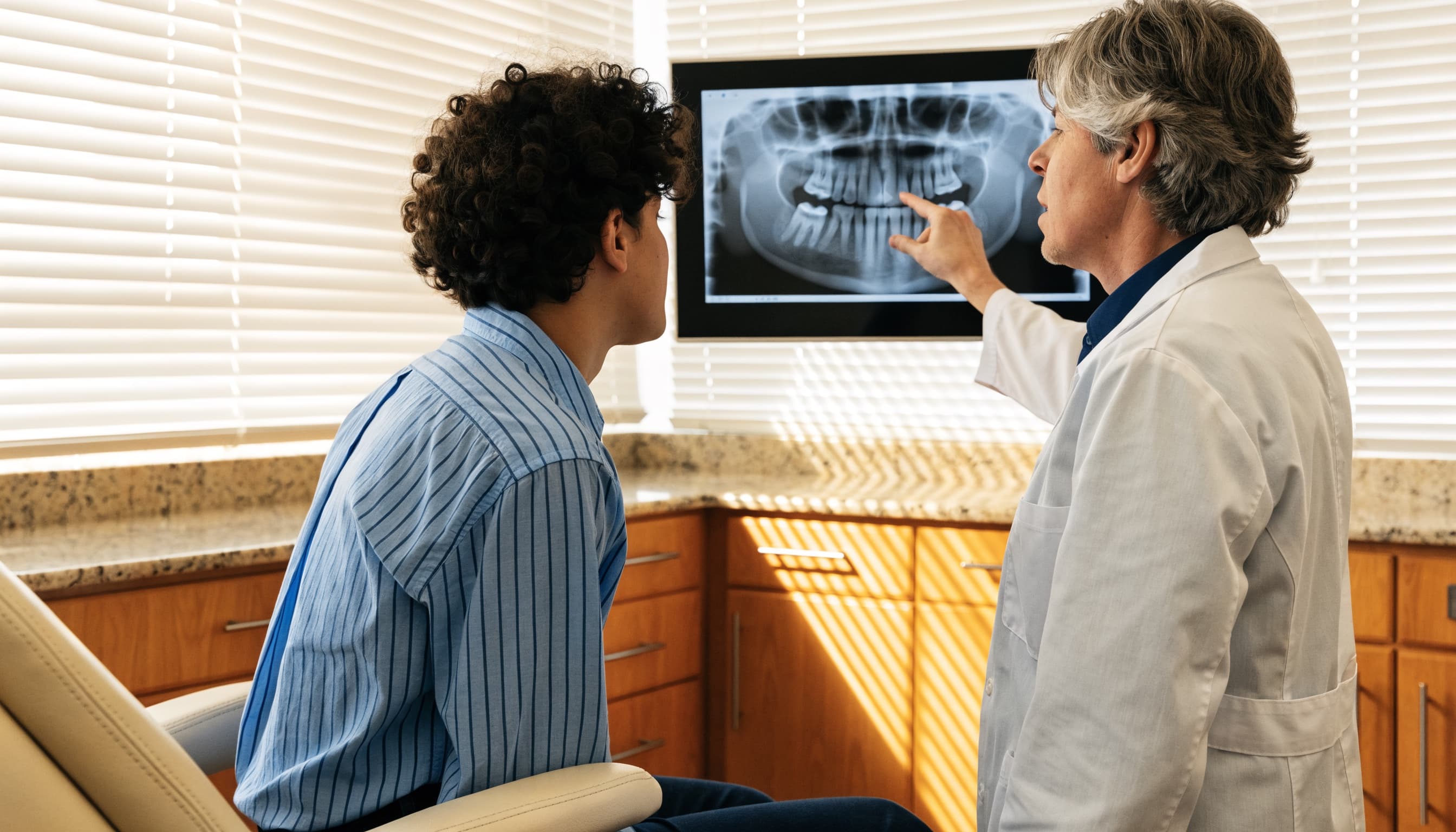
We tell you what we are seeing and why it caught our attention, and we show you rather than describe it. If a sleep study makes sense, you take that to your physician, who orders it and interprets the result. That order does not come from us, and we would be overstepping to suggest otherwise.
If the study confirms mild or moderate apnea, or if it confirms something more severe and you cannot tolerate a CPAP machine, an oral appliance is often a workable answer. It holds the lower jaw slightly forward at night so the airway stays open. In the meantime, a night guard protects the teeth from the grinding, though it is worth being clear that a guard protects enamel without treating the breathing.
Ask us at your next cleaning
If any of this sounds like you, say so while you are in the chair. It takes very little time to look, and it is a conversation we are glad to have rather than one we squeeze in. Call (408) 252-5575, Monday through Thursday.