Treatment
Dental Sealants
A thin coating painted into the grooves of back teeth, where a toothbrush bristle is too wide to reach the bottom.
A protective resin flowed into the deep grooves on the chewing surfaces of your molars, sealing them so food and bacteria cannot settle where a brush cannot reach.
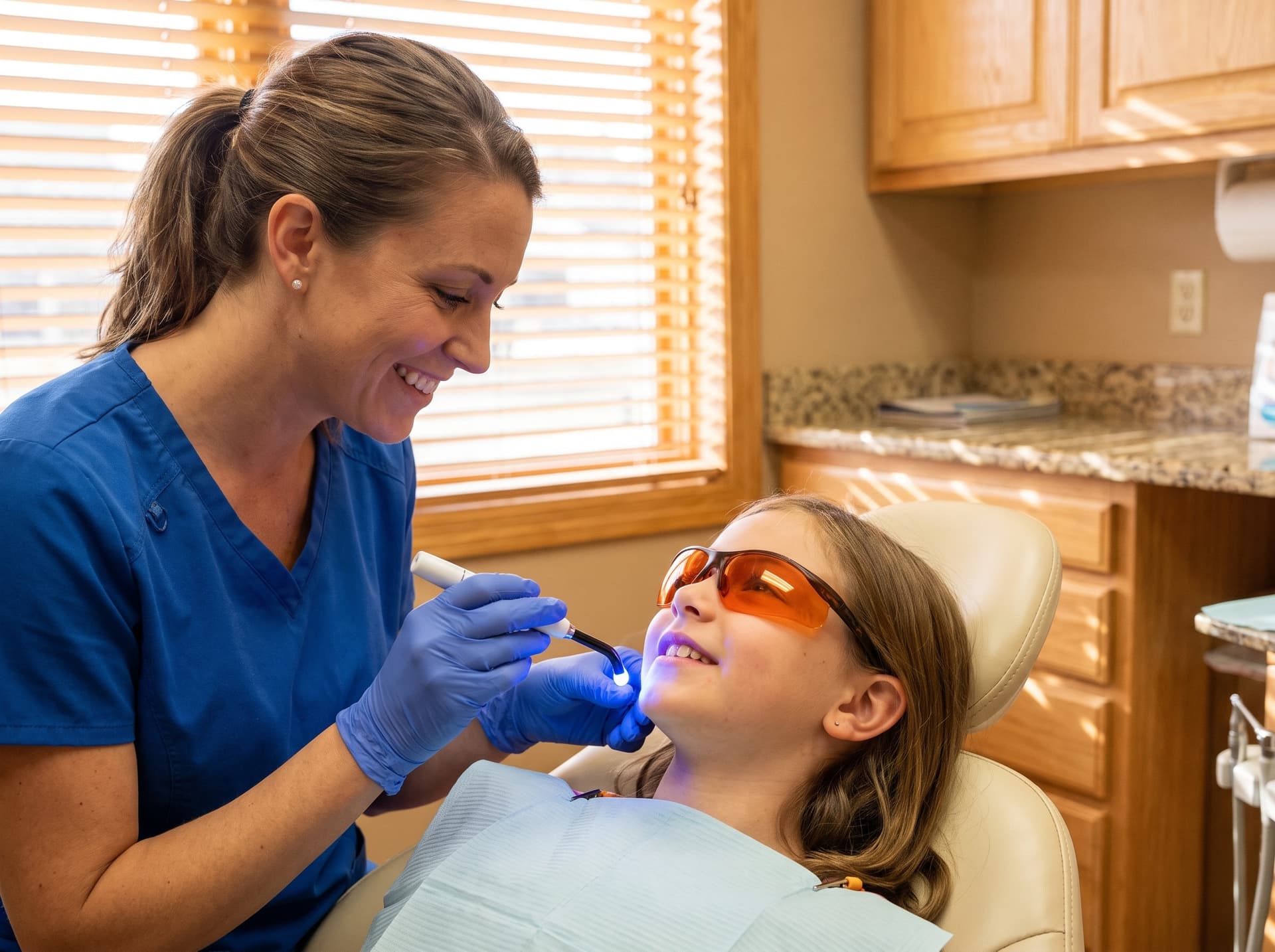
The tooth is cleaned and dried, the sealant is painted on, and a curing light sets it in seconds. No drilling, no anesthetic, and nothing removed from the tooth.
The grooves on back molars are narrower than a toothbrush bristle, which is why so many cavities start there. Sealing them is far cheaper and easier than filling them.
FAQ
Frequently Asked Questions
Common questions about dental sealants.
Adults with deep, unfilled grooves in their molars, anyone prone to decay despite good brushing, and anyone with dry mouth from medication, which raises cavity risk sharply.
Genuinely easy. You sit with your mouth open for a few minutes. Nothing hurts, nothing is numbed, and most people do not register it as a procedure at all.
A few minutes per tooth, usually done at the same visit as your cleaning rather than as a separate appointment.
Sealants wear down over years, so they get checked at each visit and some are reapplied. They protect the grooves, not the sides, so flossing still matters.
None, and you can eat immediately. We suggest skipping ice and anything very hard that day, out of general caution rather than necessity.

Come and see us
We would love to meet you
Call the office or ask for a time online. We will come back to you within a business day, and tell you what it costs first.