Treatment
Gum Disease Treatment
Bleeding gums are not normal, and the condition behind them is linked to heart disease, diabetes, and stroke.
Gum disease runs from gingivitis, which is reversible inflammation, to periodontitis, where the attachment and bone around the tooth are being lost for good.
We measure the pockets around every tooth and read your x-rays for bone loss, then treat according to what stage you are actually at, which can mean anything from better home care to deep cleaning and maintenance.
It is the leading cause of tooth loss in adults, and it is largely painless until late. Treating it early is the difference between a cleaning schedule and losing teeth.
FAQ
Frequently Asked Questions
Common questions about gum disease treatment.
Anyone whose gums bleed when brushing or flossing, or who has persistent bad breath, receding gums, or a tooth that feels slightly loose.
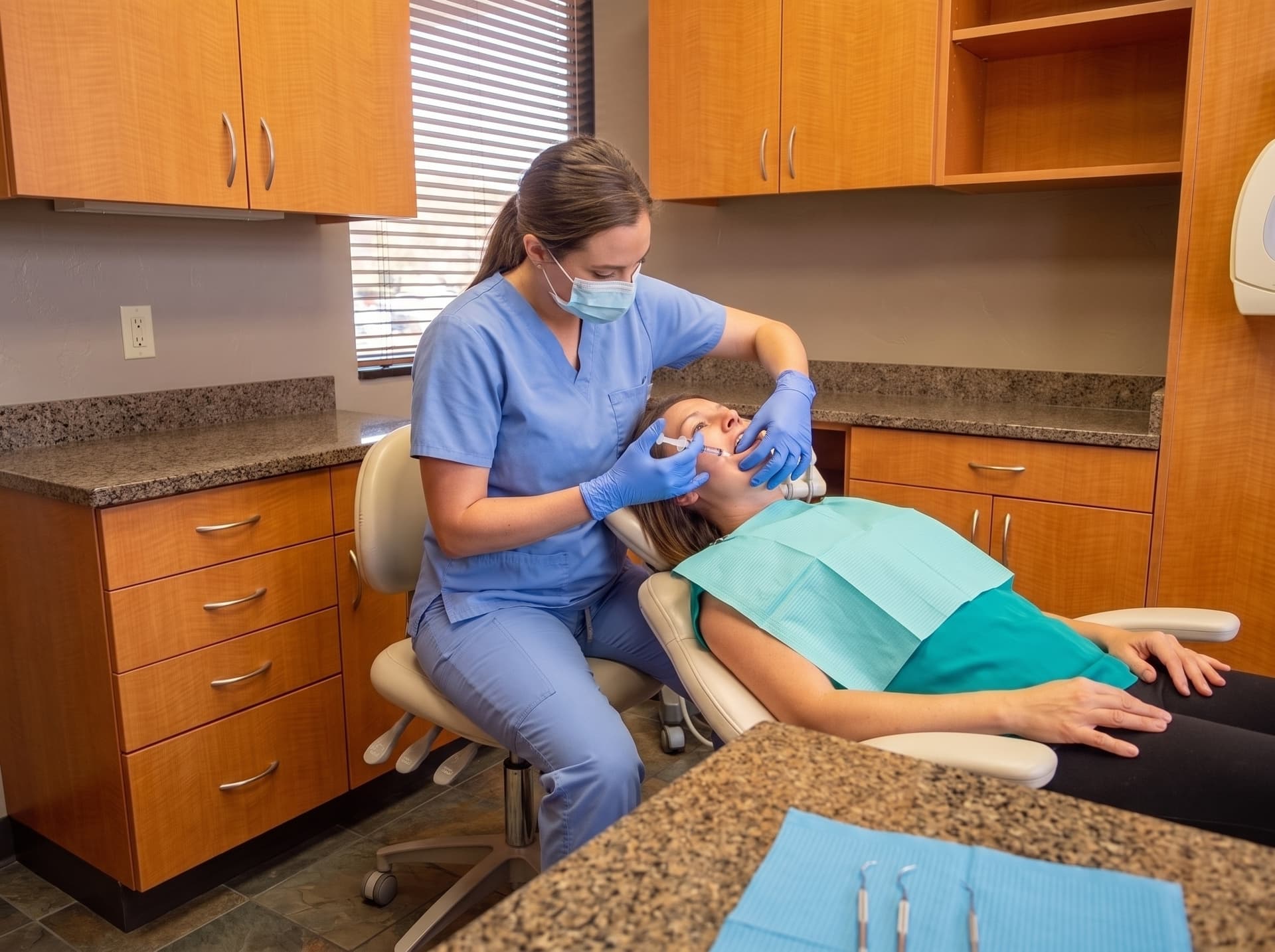
Diagnosis is measuring and talking. Treatment depends on the stage, and if deep cleaning is needed the area is numbed first so it is pressure rather than pain.
Gingivitis often turns around within weeks. Periodontitis is managed over years, with treatment first and then maintenance every three to four months.
Bone already lost does not grow back, which is why the timing matters so much. Smoking and uncontrolled diabetes both make treatment considerably harder.
Tenderness and cold sensitivity for a week or two after deep cleaning. Gums that were swollen will tighten, which can make teeth look a little longer.

Come and see us
We would love to meet you
Call the office or ask for a time online. We will come back to you within a business day, and tell you what it costs first.