Treatment
Impacted Wisdom Tooth
A wisdom tooth that cannot break through presses on the tooth in front and traps bacteria where no brush reaches.
An impacted wisdom tooth is one blocked from erupting, whether by bone, gum, or the tooth in front of it. It may be fully buried or partly through.
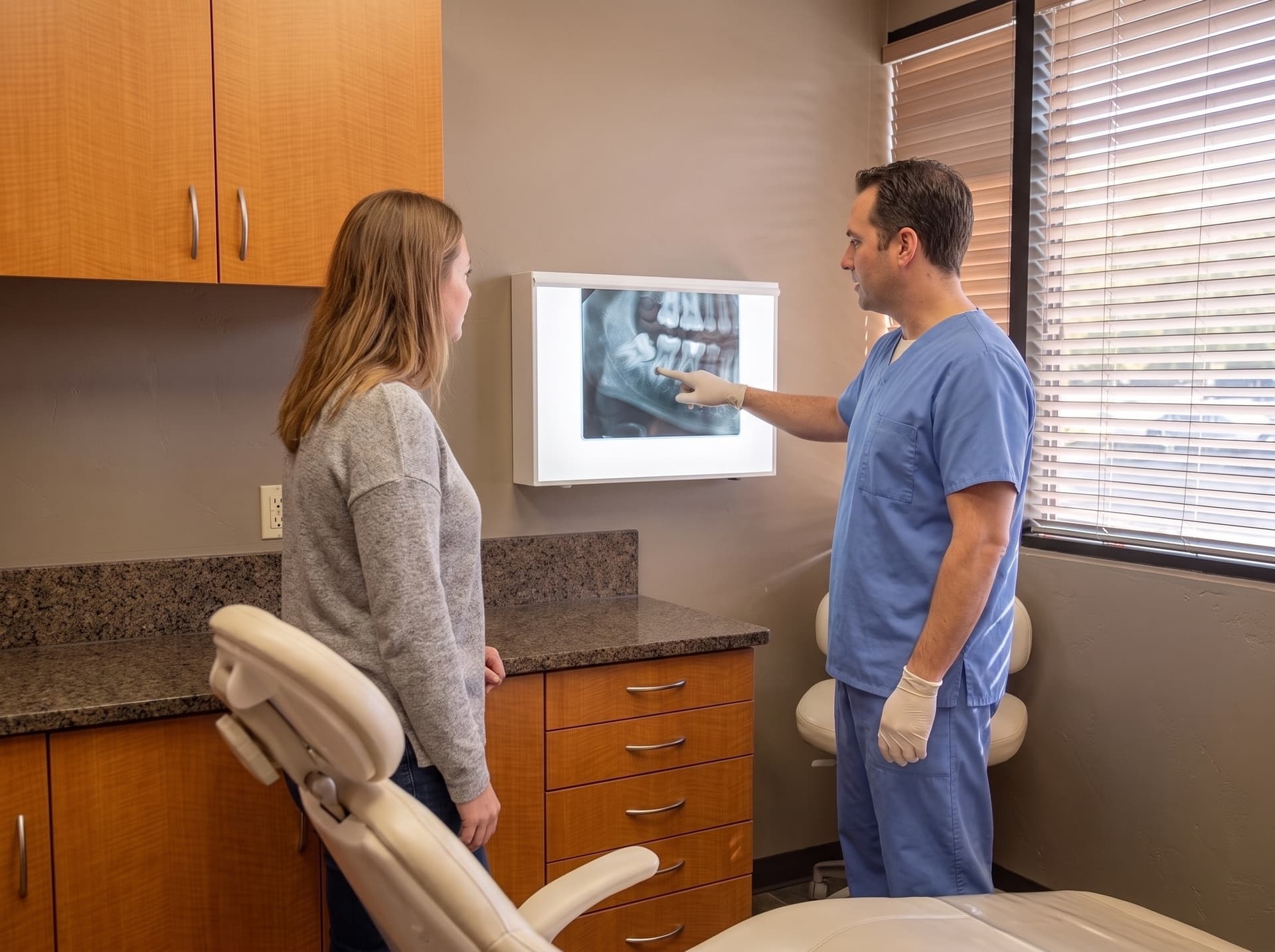
A 3D scan shows the angle it is lying at, how close the roots are to the nerve, and whether it is damaging the second molar. That determines whether it is removed or monitored.
Partly erupted teeth are the worst of both cases, because the opening lets bacteria in but is impossible to clean. Removing them prevents repeated infection and decay next door.
FAQ
Frequently Asked Questions
Common questions about impacted wisdom tooth.
People in their late teens and twenties, when it is easiest to assess. Also anyone with recurring soreness at the back of the jaw or a molar that has started to decay behind.
Diagnosis is a scan and a conversation. If removal is the answer, it is a surgical extraction, which means a small incision and often sectioning the tooth.
Assessment is one short visit. Removal runs thirty to forty-five minutes per tooth, and deeply impacted teeth take longer than partly erupted ones.
A fully buried, symptom-free tooth away from the nerve is sometimes best left alone and watched. Not every impacted wisdom tooth needs to come out, and we will say so.
Longer than a simple extraction, usually five to seven days of swelling and stiffness, since more bone and gum are involved. Stitches may need removing after a week.

Come and see us
We would love to meet you
Call the office or ask for a time online. We will come back to you within a business day, and tell you what it costs first.