Treatment
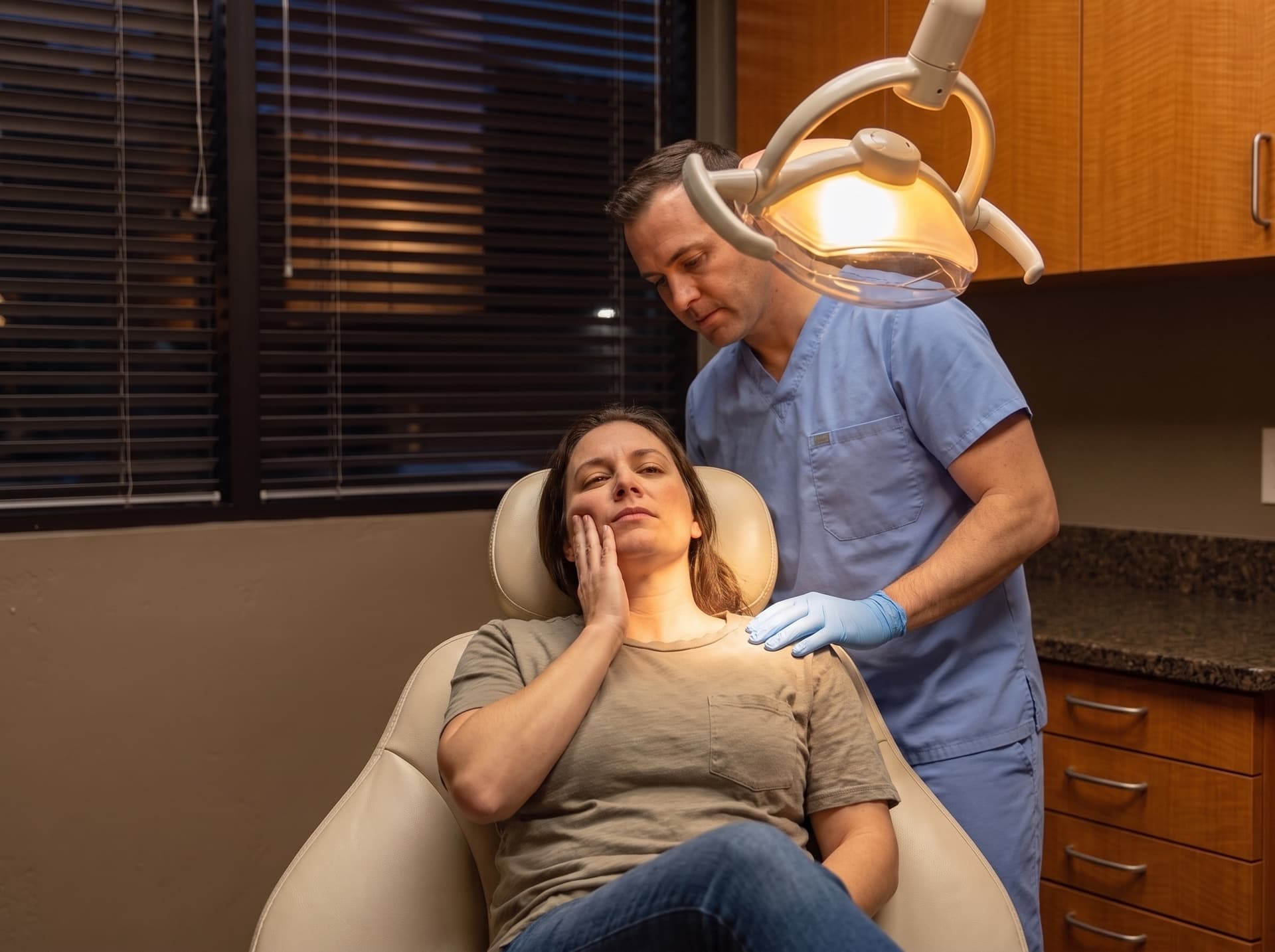
Severe Toothache
A tooth that throbs on its own or wakes you at night is telling you the nerve is involved. That needs seeing.
Pain that arrives without being provoked, lingers after heat or cold, or wakes you up generally means the nerve inside the tooth is inflamed or infected.
We find which tooth it is, which is harder than it sounds because this kind of pain radiates. Testing each candidate with cold and gentle tapping, plus an x-ray, usually settles it.
Once we know which tooth and how far it has gone, the answer is generally a root canal or an extraction. Either one ends the pain that day or shortly after.
FAQ
Frequently Asked Questions
Common questions about severe toothache.
Anyone with pain that throbs unprompted, keeps them awake, does not respond to painkillers, or comes with swelling. Call as early in the day as you can.
We get you numb early, because it is difficult to think about options while in that much pain. Diagnosis then proceeds much more calmly.
Thirty minutes or so to diagnose, and often we can start treatment at the same visit rather than sending you away to come back.
We are open Monday to Thursday and closed Friday through Sunday. If pain starts on a weekend and you have swelling, fever, or trouble swallowing, go to an emergency room rather than waiting for Monday.
Pain that suddenly stops is not good news. It often means the nerve has died while the infection continues without the warning signal, so come in anyway. Otherwise relief is quick once the pressure is released.

Come and see us
We would love to meet you
Call the office or ask for a time online. We will come back to you within a business day, and tell you what it costs first.