People rarely come in asking for a specific cosmetic treatment. They come in with something that bothers them. Their teeth look more yellow than they used to. A front tooth chipped on a fork. An old filling near the gumline has turned dark. Or they simply do not like how their smile looks in photos.
The good news is that most of these have more than one fix. The harder part is that the options are very different. Whitening changes color but not shape. Bonding fixes small things quickly and can be redone. Porcelain veneers can change color, shape, and length all at once, but they are permanent.
Picking the right one comes down to what you want to change, how long you want it to last, and how much of your natural tooth you are willing to alter. Knowing how each option works makes it much easier to judge any recommendation you hear.
This guide covers what each treatment does, how they compare, what can affect your result, the questions worth asking, and what cost and insurance usually look like. Crystal Ladhar D.D.S. is a single-doctor practice in west San Jose, and every cosmetic case here is planned and completed by Dr. Crystal Ladhar.
Start With What You Want to Change
Before comparing treatments, it helps to name the problem. Most cosmetic concerns fall into a few groups:
- Teeth that have yellowed or darkened over time
- A chipped, uneven, or worn edge on one or two teeth
- Small gaps between front teeth
- Teeth that are short, worn down, or uneven in size
- Old bonding or fillings that have stained
- Several issues at once, such as shade, shape, and minor crowding
If the only issue is color, whitening may be all you need. If it is one small chip, bonding is often the answer. When several things bother you at once, veneers are worth discussing. And if the real issue is crowding, clear aligners may be a better first step than covering the teeth.
Teeth Whitening
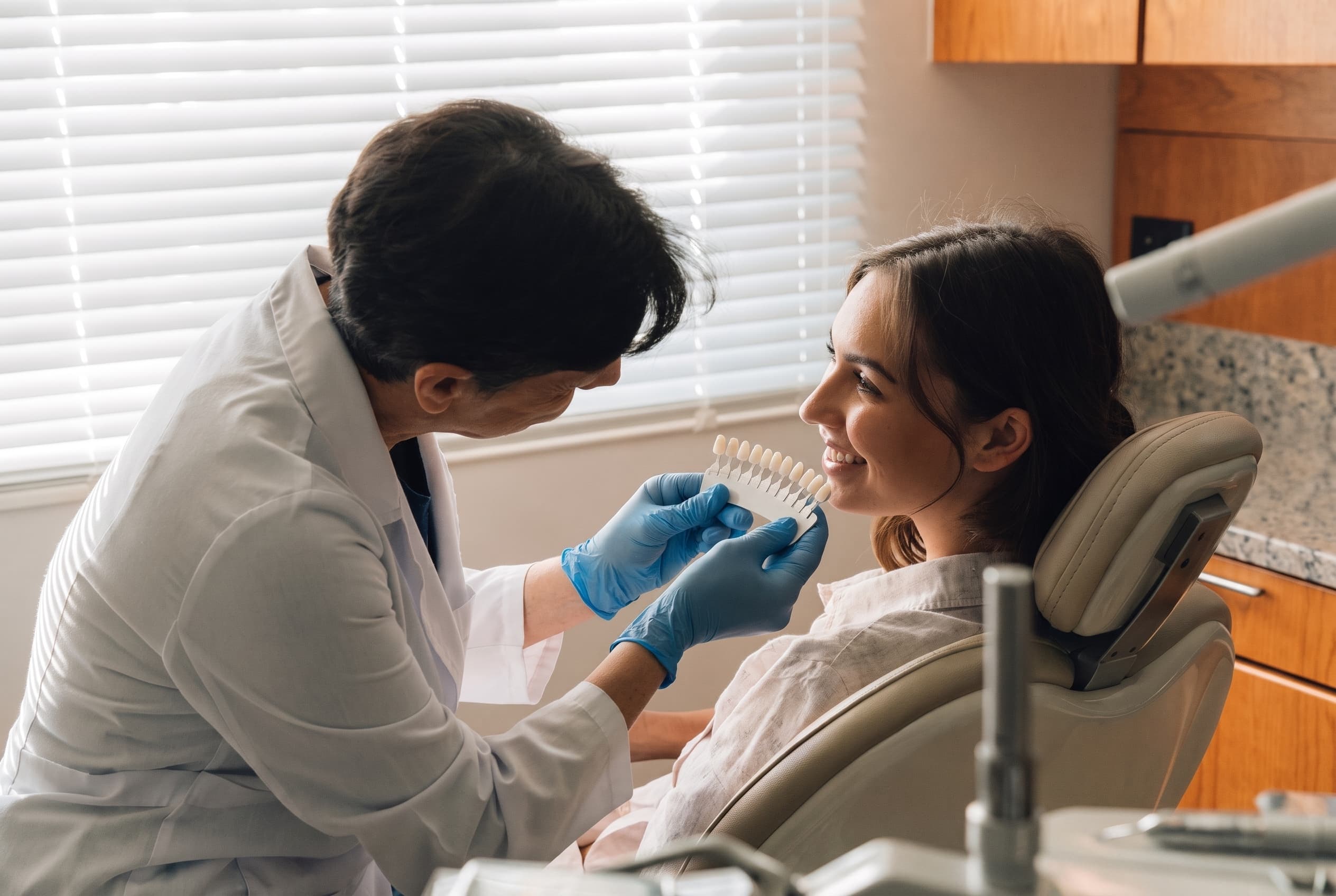
Teeth whitening uses a peroxide gel to lift stains from inside the tooth. Coffee, tea, red wine, and age all darken teeth from within, where brushing cannot reach.
In office or at home
In-office whitening takes about an hour. Take-home whitening uses custom trays made from a scan of your teeth, worn 30 to 60 minutes a day for one to two weeks. Both are supervised by the dentist, so the gel is strong enough to work without harming your enamel.
What to know
Whitening only works on natural teeth. It does not change the color of crowns, veneers, or fillings, so if you have dental work on your front teeth, the shades can end up mismatched. It also works least well on gray discoloration or a tooth darkened by an old injury. Brief, sharp sensitivity is common and passes within a day or two.
Dental Bonding
Dental bonding uses tooth-colored composite, the same material used for white fillings. It is shaped by hand directly onto the tooth, hardened with a light, and polished.
What it fixes
Bonding works well for a single chipped edge, a small gap, an uneven edge, or a worn spot near the gumline. It is the least invasive cosmetic option, and it usually needs no numbing and no enamel removed.
What to know
One tooth usually takes 30 to 60 minutes, done in a single visit. Composite stains over the years in a way porcelain does not, so bonding is typically redone every five to ten years. Coffee and red wine shorten that. Bonded edges can also chip if you bite your nails or open packages with your teeth.
Porcelain Veneers
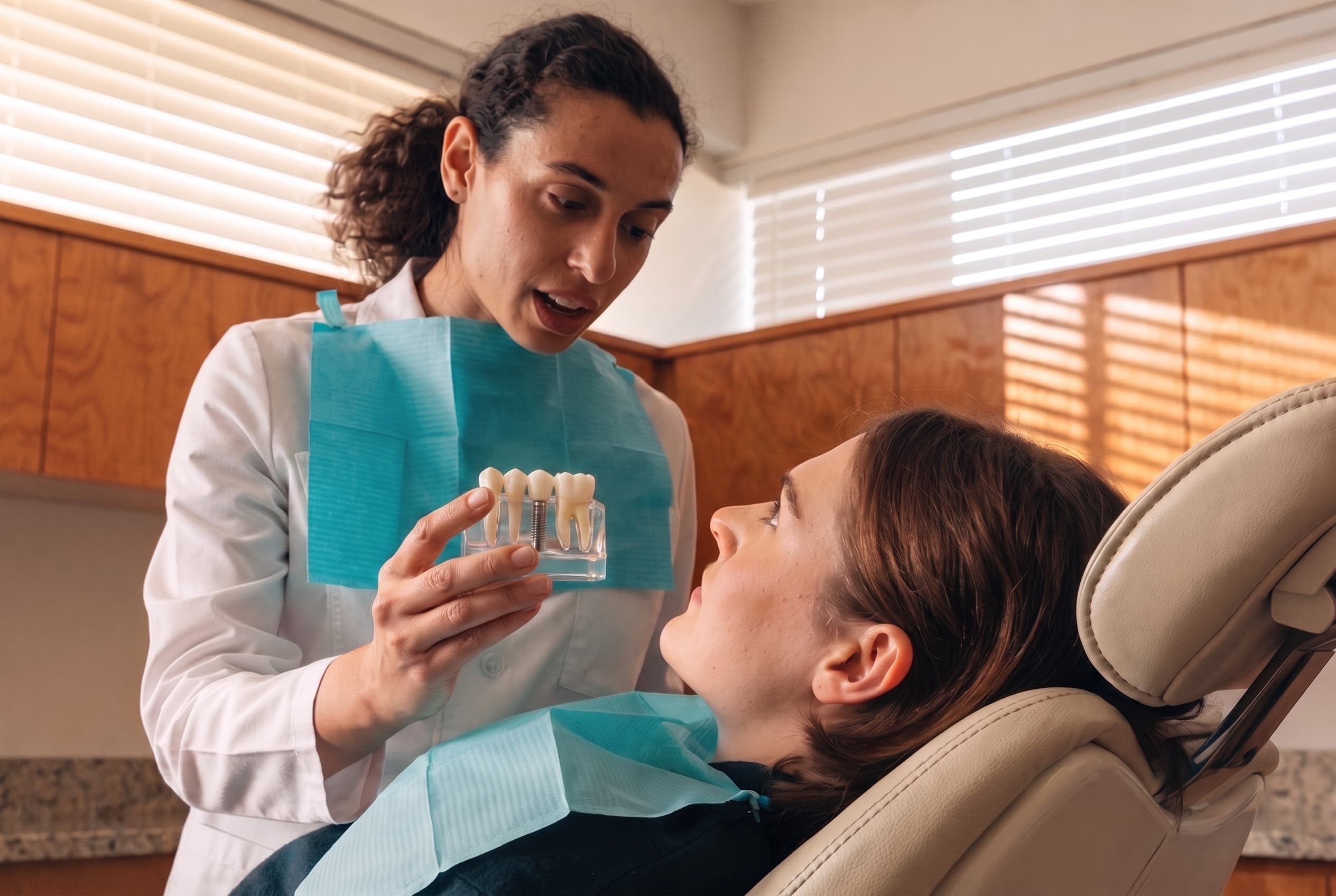
Porcelain veneers are thin shells of porcelain bonded to the front of the teeth. They can change color, shape, and length, and they can hide small gaps or overlaps.
How the process works
Veneers start with a planning visit. Your teeth are scanned with the iTero scanner, the new shape is designed digitally, and you see it before anything is prepared. A thin layer of enamel is then removed, and you wear temporaries while the lab makes your veneers. They are bonded at a second visit about two to three weeks later.
What to know
Veneers are not reversible, because enamel is removed to make room for them. Porcelain holds its color well, but it can chip under heavy force, so a custom night guard is recommended if you grind. Healthy gums and enough enamel to bond to come first. Rushing the planning is how people end up with veneers they do not like.
How the Three Options Compare
Whitening
Whitening changes color only. It is the simplest and least costly option, and it does not alter the shape of the tooth. Results fade slowly and can be touched up.
Bonding
Bonding fixes small chips, gaps, and edges in one visit. It is reversible and moderately priced, but it stains and needs redoing every five to ten years.
Veneers
Veneers change color, shape, and length at once. Porcelain resists stains and lasts the longest, but it is permanent and costs the most.
Many people combine treatments. A common plan is whitening first, then bonding or veneers matched to the new shade. The order matters, because bonding and porcelain will not whiten later.
Ten Questions to Ask Before Cosmetic Dental Treatment
Ask these at any practice you are considering. The answers show how the office thinks as much as what it recommends.
- What is the least invasive option that fixes my concern? A good answer starts with the simplest treatment that works.
- Can I see the planned result before you change anything? A digital design shows what the plan is aiming for.
- Will my existing crowns or fillings match? Whitening does not change dental work, so the order of treatment matters.
- How much enamel will be removed, if any? This tells you whether the treatment can be undone.
- How long should I expect the result to last? Bonding, whitening, and porcelain all age differently.
- Are my gums healthy enough to start? Cosmetic work should sit on a healthy foundation.
- Should I fix crowding first? Sometimes straightening teeth means fewer veneers, or none at all.
- Do I grind my teeth, and does that change the plan? Grinding can chip both bonding and porcelain.
- What does the fee include? Ask whether planning visits, temporaries, and adjustments are part of the price.
- What happens if I do not like how it looks? Ask how shade and shape are approved before anything is final.
What Cosmetic Dentistry Costs
Cost depends on the treatment, the number of teeth, and how much planning your case needs. Any number quoted before an exam is a guess. At our office, Anna, our treatment coordinator, prices your full plan in writing before you agree to any of it, and she will tell you honestly what is worth doing now and what can wait.
Whitening usually costs the least, bonding sits in the middle, and veneers cost the most per tooth. Because bonding needs redoing over time, it can cost more over many years than it seems at first.
To spread out the cost, established patients can arrange in-house payments with Anna, third-party financing is available to any patient at no extra cost, and patients 65 and over take five percent off treatment.
Does Insurance Cover Cosmetic Treatment?
Most dental plans do not pay for treatment done only to improve how teeth look. Whitening and veneers are rarely covered. Bonding is sometimes covered when it repairs a chipped or broken tooth rather than only changing its look.
We are out of network with every insurer and accept all PPO plans. Linda, our billing coordinator, files your claim and follows up for you. If you are not sure what your plan pays, send your details through our benefits check and Linda will tell you before treatment starts. We do not accept HMO plans or medical insurance.
Red Flags When Comparing Cosmetic Offices
Most dental offices in San Jose do good work. These patterns deserve a second look:
- Veneers recommended for a single small chip that bonding could fix
- No digital preview before teeth are prepared
- No plan for matching existing crowns or fillings to whitened teeth
- No discussion of grinding or a night guard for porcelain
- No check of gum health before cosmetic work
- A price per tooth with no written breakdown of what is included
How Our Office Approaches Cosmetic Dentistry
Dr. Ladhar's approach is education, not sales. You hear every option that fits, including the smallest one, along with the trade-offs and the cost of each. If whitening alone will make you happy, that is what she will tell you.
Cosmetic work here is planned with iTero digital scanning, so you can see the planned result before any work begins. Veneers are planned over more than one visit on purpose, because a careful plan is what makes a natural-looking result.
None of this replaces an in-person exam. Options, timelines, and fees are set only after your teeth and gums have been examined.
Book a Cosmetic Consultation in San Jose
If something about your smile bothers you, a consultation is the easiest place to start. You leave knowing which options fit, how long each would last, and what each would cost.
Crystal Ladhar D.D.S. is at 991 Saratoga Ave, Ste 210, in west San Jose, open Monday through Thursday from 7:30 am to 5:00 pm. Call (408) 252-5575 or request a visit online, and we will walk you through your options.